

Jul 6th,2026
Football requires stable, durable, and high-performance playing surfaces for professional matches, daily training, and public recreation. For a long time, natural grass was the mainstream choice for football pitches due to its natural appearance and soft touch. However, with the innovation of sports facility materials, modern artificial turf has become the top choice for professional stadiums, school training grounds, and community football pitches across the globe. Superior to traditional natural grass in weather adaptability, durability, playing performance, cost-effectiveness, and eco-friendliness, artificial turf perfectly fits the high-frequency, long-term, and high-standard usage demands of modern football venues.
Natural grass pitches are highly susceptible to weather fluctuations and seasonal changes. Heavy rain or snow easily leads to waterlogging, muddy ground, and slippery surfaces, forcing matches and training sessions to be postponed or canceled. In hot and dry weather, natural grass tends to wither, exposing bare and uneven soil. In cold winters or low-sunlight areas, natural grass struggles to maintain steady growth, resulting in extremely low venue utilization throughout the year.
In comparison, premium artificial turf is manufactured with weather-resistant synthetic fibers and equipped with a professional permeable drainage system. It remains flat, clean, and anti-slip under extreme weather conditions, including heavy rainfall, snow, high heat, and freezing temperatures. The efficient drainage structure quickly eliminates surface water and avoids mud accumulation. Artificial turf pitches support 100% normal use on rainy and snowy days, enabling 365-day uninterrupted operation and completely solving the weather-dependent shutdown problem of natural grass fields.
Surface consistency is critical for fair football competitions and safe player movement. After frequent kicking, sliding, and rolling, natural grass fields suffer from uneven wear, subsidence, and inconsistent grass density. Unstable ground conditions lead to irregular ball bounce and rolling speed, disrupting players’ technical performance and judgment, and greatly increasing the risk of sports injuries.
FIFA-standard artificial turf adopts advanced bionic weaving technology, featuring uniform grass height, density, and toughness across the entire pitch. It delivers stable and consistent ball rolling and bouncing performance in all usage scenarios without uneven ground defects. Upgraded turf materials accurately simulate the traction and cushioning of natural grass, providing a realistic foot feel and flexible movement experience. The uniform and flat surface effectively reduces sports injuries caused by ground flaws, creating a safe, fair, and professional competition environment for amateur and professional football players of all ages.
Natural grass has weak wear resistance and limited load-bearing capacity. A standard natural grass football field only supports 3 to 5 hours of daily use. Excessive use causes large-area grass damage, bare soil, and soil compaction, requiring long rest cycles and regular restoration to recover. Such limitations make natural grass unable to meet intensive usage demands from schools, sports clubs, and public sports venues.
Made of high-toughness, UV-stabilized synthetic fibers, quality artificial turf features excellent wear resistance, compression resistance, and anti-aging performance. It withstands long-term high-intensity kicking, trampling, and rolling without fading, lodging, or damage. With a service lifespan of 8–10 years under routine maintenance, it supports all-day high-frequency use with no recovery downtime. For high-traffic football training bases and public venues, artificial turf significantly improves space utilization and maximizes the commercial and public value of sports facilities.
Natural grass pitches incur enormous ongoing maintenance costs and labor expenses. Daily upkeep includes regular watering, fertilizing, mowing, weeding, soil loosening, and pest control, plus seasonal reseeding and grass restoration. These continuous operations generate high annual costs for water, materials, and labor. Industry data proves that venues switching from natural grass to artificial turf save an average of $12,000 per year in maintenance and labor fees.
Artificial turf eliminates most complicated daily maintenance work. It requires no watering, fertilizing, mowing, or seasonal reseeding, only simple regular cleaning and inspection. The one-time installation investment avoids recurring long-term operational expenses. Throughout its full life cycle, artificial turf delivers far lower comprehensive costs than natural grass, bringing stable and high economic returns for venue operators, educational institutions, and public sports projects.
Natural grass pitches consume massive amounts of water resources for irrigation every year. Additionally, pesticides and fertilizers used for lawn maintenance cause potential soil and water pollution. In water-scarce and arid regions, large-scale natural grass football fields place a heavy burden on local ecological resources.
Premium artificial turf is crafted from non-toxic, eco-friendly, and recyclable polymer materials, causing no harm to the human body or ecological environment. It saves huge water resources by eliminating irrigation needs and completely avoids chemical pollution from fertilizers and pesticides. With outstanding UV resistance and color fastness, the turf stays vibrant green all year round without yellowing or withering, achieving zero pollution, low energy consumption, and sustainable operation of football venues.
Restricted by seasons and climate, natural grass turns yellow, withers, and grows sparsely in autumn and winter, severely damaging the overall appearance of sports venues. In contrast, artificial turf is free from seasonal and growth limitations. It maintains a neat, lush, and professional look all year round, upgrading the overall image of the venue.
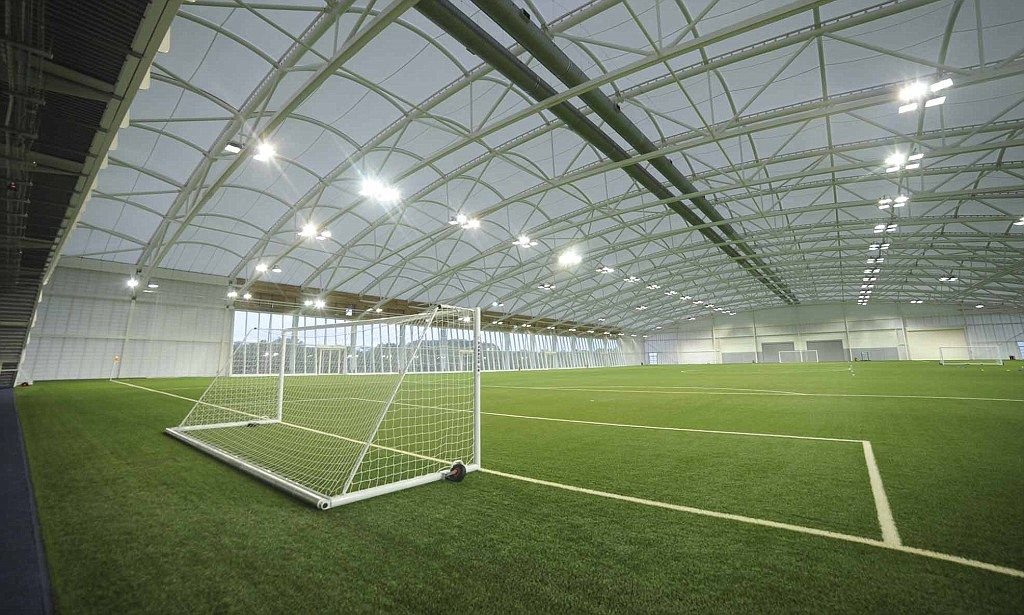
Besides superior performance, artificial turf features highly flexible installation. It can be laid on multiple flat bases such as cement and asphalt, adapting to diverse scenarios including indoor courts, rooftop football fields, and suburban training grounds. It breaks the geographical and environmental restrictions of natural grass planting, enabling the construction of high-standard football venues in more regions.
With the continuous upgrading of sports material technology, modern artificial turf has overcome the rigid and unnatural flaws of early products, with overall performance surpassing traditional natural grass comprehensively. Its all-weather availability, stable sports performance, high durability, low maintenance costs, and environmental advantages make it the ideal choice for modern football field construction.
Whether for professional stadium events, school daily training, or public mass fitness, artificial turf can create safe, efficient, and high-standard sports venues. For football field investors and operators, choosing high-quality artificial turf is not only a cost-effective investment decision but also a reliable guarantee for long-term stable and profitable venue operation.