

Dec 22nd,2025
Choosing the right rubber gym flooring thickness is essential for safety, durability, and performance in different fitness areas. Rubber flooring is widely used in commercial and home gyms due to its shock absorption, slip resistance, and noise reduction. Below is a practical guide explaining how different thicknesses of rubber flooring are applied across various gym zones.
1. 6–8 mm Rubber Flooring – Light Training Areas
Thin rubber flooring (6–8 mm) is ideal for light fitness zones such as stretching areas, yoga rooms, aerobics studios, and walking tracks. It provides basic comfort, anti-slip performance, and easy maintenance, making it suitable for low-impact activities and general gym traffic.
2. 10–12 mm Rubber Flooring – Cardio & Functional Training
Rubber flooring with a thickness of 10–12 mm is commonly used in cardio zones, including treadmill, spinning, and cross-training areas. This thickness offers enhanced shock absorption and noise reduction, protecting both equipment and subfloors while improving user comfort.
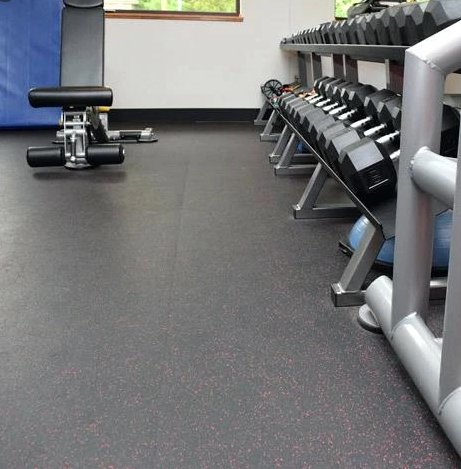
3. 15–20 mm Rubber Flooring – Free Weight Areas
For free weight zones, 15–20 mm rubber flooring is highly recommended. It effectively absorbs impact from dropped dumbbells and barbells, reduces vibration, and ensures long-term durability under heavy use. This thickness is widely used in commercial gyms and fitness centers.
4. 25 mm and Above – Heavy Lifting & Powerlifting Zones
Extra-thick rubber flooring (25 mm or more) is designed for powerlifting platforms and Olympic lifting areas. It provides maximum impact resistance, floor protection, and athlete safety when handling extreme loads.