

Dec 19th,2025
Artificial grass has become a popular surface solution for sports fields, landscaping, playgrounds, and residential lawns. To ensure long-term performance and aesthetics, proper installation is just as important as product quality. Below are the key precautions to consider when installing artificial grass.
1. Ground Preparation
A stable and well-prepared base is the foundation of successful artificial grass installation. The ground should be excavated to the required depth and compacted firmly. A base layer of crushed stone or gravel is recommended to ensure drainage and prevent uneven settlement over time.
2. Drainage Design
Good drainage is critical, especially for outdoor applications. Make sure the base allows water to flow away efficiently. Poor drainage can lead to water accumulation, odors, or surface deformation. Sloping the base slightly helps improve water runoff.
3. Accurate Cutting and Layout
Before fixing the turf, dry-lay the artificial grass rolls and align the fiber direction consistently. Measure and cut carefully to minimize seams and material waste. Proper alignment improves the natural appearance of the finished surface.
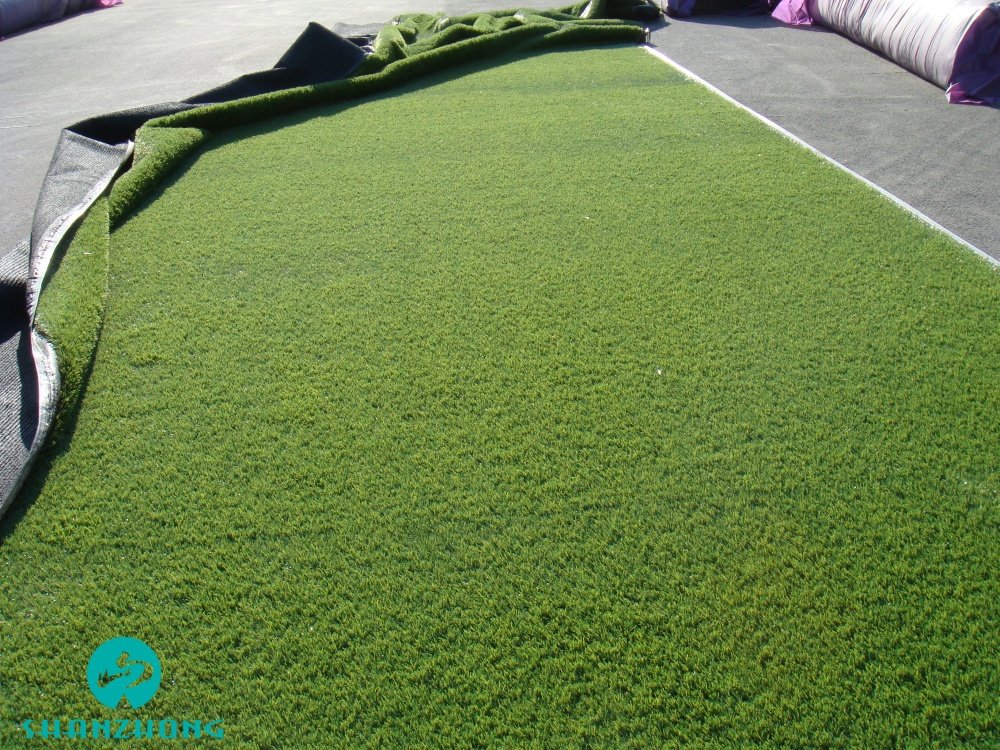
4. Seam Joining and Fixing
Use professional joint tape and adhesive to connect seams securely. Apply even pressure and allow sufficient curing time. Fix the turf edges with nails or glue to prevent lifting, especially in high-traffic areas.
5. Infill Application
Infill materials such as silica sand or rubber granules help stabilize the turf fibers and improve durability. Brush the infill evenly into the grass using a power broom or stiff brush. Avoid overfilling, which can reduce comfort.
6. Final Brushing and Inspection
After installation, brush the surface to lift the fibers and check for loose edges or uneven areas. Regular maintenance will further extend the lifespan of the artificial grass.