

Jul 27th,2026
When designing an outdoor space, one of the first decisions homeowners, commercial property owners, and landscape architects face is whether to install natural grass or artificial grass. Both options have advantages, but the right choice depends on your budget, climate, maintenance expectations, and intended use.
Natural grass demands continuous care throughout the year. It requires watering, mowing, fertilizing, weed control, and pest management.
Artificial grass eliminates most of these routine tasks. Occasional brushing, debris removal, and rinsing are generally enough to keep the surface clean and attractive.
For busy homeowners or commercial properties, this significantly reduces maintenance time and labor costs.
Maintaining a healthy natural lawn can consume thousands of liters of water annually, especially in dry climates.
Artificial turf requires no irrigation for growth, making it an attractive solution in regions where water conservation is important.
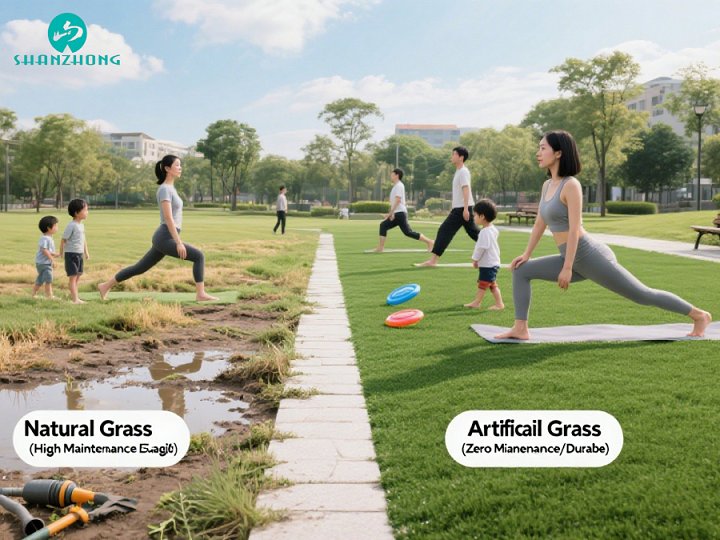
Heavy foot traffic quickly damages natural lawns, leading to bare patches and muddy areas.
Artificial grass is designed to withstand frequent use, making it ideal for:
Gardens
Schools
Parks
Commercial landscaping
Sports facilities
Rooftop gardens
Quality synthetic turf can maintain its appearance for many years with proper maintenance.
Natural grass changes with the seasons and weather conditions.
Artificial grass remains green and visually consistent throughout the year regardless of rainfall or drought.
Although artificial grass has a higher initial installation cost, its reduced maintenance expenses often offset the investment over time.
There are no ongoing expenses for mowing equipment, fertilizers, irrigation systems, or lawn treatments.
Artificial grass reduces water usage and eliminates fertilizers and pesticides, but it is still a manufactured product with its own environmental considerations. Buyers should evaluate both benefits and trade-offs based on local conditions and project goals.
Neither option is universally better. Artificial grass offers excellent durability, low maintenance, and year-round beauty, while natural grass provides natural cooling and ecological benefits. Selecting the right solution depends on the specific application and performance requirements.