

Jul 27th,2026
Modern artificial grass is the result of advanced manufacturing technologies that combine polymer engineering with precision production.
High-quality artificial grass typically uses:
Polyethylene (PE)
Polypropylene (PP)
Nylon (for specific applications)
Each material offers different characteristics in softness, durability, and resilience.
Plastic pellets are melted and extruded into grass fibers.
Manufacturers can produce:
Monofilament yarn
Fibrillated yarn
Curly yarn
Diamond-shaped yarn
S-shaped yarn
Each fiber profile influences recovery performance and visual appearance.
The fibers are stitched into a primary backing using computerized tufting machines.
Key production parameters include:
Gauge
Stitch rate
Density
Pile height
These determine the finished turf's appearance and durability.
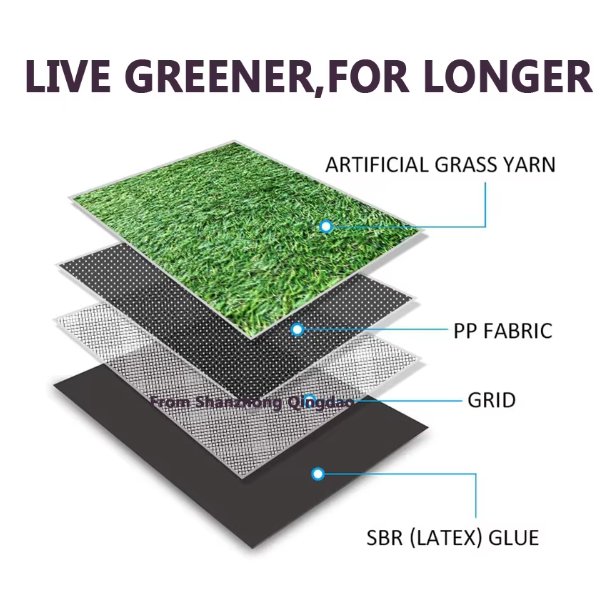
A secondary backing secures the fibers in place.
Depending on product design, manufacturers may use:
Latex backing
PU backing
Thermoplastic backing
Every production batch is inspected for:
Fiber pull strength
Color consistency
Roll width
Weight
Drainage performance
UV resistance
Finished rolls are wrapped securely before shipment to customers worldwide.
Understanding the manufacturing process helps buyers evaluate product quality and compare different suppliers more effectively.