

Mar 31st,2026
A cast-in-place running track is constructed by directly mixing, paving, and curing specialized materials on the construction site. Unlike prefabricated rolls, it is custom-shaped to fit the exact dimensions and requirements of the space, making it ideal for irregularly sized areas or large-scale venues.
Seamless Structure: Eliminates weak seams prone to cracking or delamination, ensuring a smooth, uninterrupted surface for unrestricted movement.
Adjustable Elasticity: The material ratio can be fine-tuned to accommodate different user groups (students vs. professional athletes), significantly reducing impact stress on joints and minimizing sports injuries.
Superior Durability: Engineered to withstand extreme weather, UV radiation, and heavy foot traffic, with a service life ranging from 8 to 15 years.
Eco-Friendly & Safe: Compliant with the National Standard GB 36246-2018 for school synthetic surfaces, our materials contain no toxic substances, ensuring safe use for children and athletes alike.
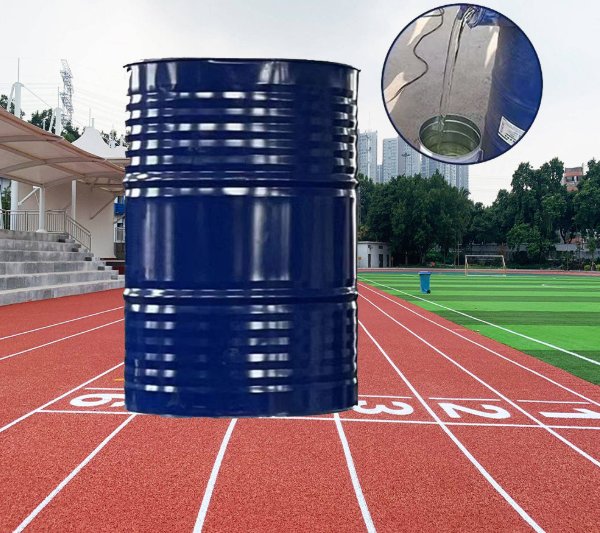
The quality of a cast-in-place track is determined by its two essential components. Like bones and muscles, they work in synergy to deliver a high-performance surface.
Granules form the functional "skeleton" of the track, directly dictating its elasticity, slip resistance, and wear resistance. We offer a tailored selection to suit diverse applications:
Color Fastness: Available in vibrant, long-lasting hues (red, green, blue, etc.) with a color fastness rating of over 8, resisting fading from prolonged sun exposure.
Impact Absorption: Boasts an impressive impact absorption rate of 35% to 45%, effectively cushioning jumps and runs to protect joints.
Slip Resistance: Offers a superior coefficient of friction (BPN value ≥ 65), ensuring secure footing even in wet conditions.
Ideal For: Schools, kindergartens, and community areas where safety and aesthetics are paramount.
Sustainability: Made from recycled tire rubber, promoting environmental circularity with a recycling rate of over 60%.
Cost-Effective: Provides excellent value for money without compromising essential durability.
Wear Resistance: Withstands heavy foot traffic and equipment rolling with a wear rate of less than 2.5%.
Ideal For: Community parks, temporary tracks, or venues with lower usage frequency.
Our granules feature a uniformly distributed particle size (0.3mm - 4mm, customizable):
Large Granules (2mm - 4mm): Enhance water permeability, perfect for rainy regions.
Small Granules (0.3mm - 1.5mm): Improve traction for sprinters.
The adhesive acts as the "nerve" that binds the granules together and anchors the track to the subbase. It is the critical factor preventing delamination, cracking, and surface failure.
Our PU Adhesive stands out with industry-leading benefits:
Exceptional Bond Strength: Forms a robust bond with both EPDM/recycled rubber granules and subbase materials (concrete/asphalt). A poor bond can lead to costly track failure within just one year.
Eco-Certified: Complies with national and EU environmental standards, containing no heavy metals (lead ≤ 50mg/kg) or toxic volatile organic compounds (TVOC ≤ 0.05mg/m³).
Weather Resilience: Operates flawlessly in temperatures ranging from -40°C to 80°C, resisting UV degradation and water damage.
High Performance: Exhibits high tensile strength and elongation, accommodating minor ground movements to extend the track's lifespan.
Application Flexibility: Available in different formulations (e.g., non-yellowing, relatively yellowing-resistant) to match specific granule colors and project requirements.
Superior materials demand precise application. The construction process, when executed properly, ensures maximum performance and longevity.
85% of surface cracks and 70% of blisters stem from a faulty subbase.
Cleaning & Compaction: Clear the site of vegetation and debris. Compact the soil with a roller to a density of ≥ 93%.
Leveling: Fill low-lying areas with graded sand and gravel for a smooth finish.
Concrete Curing: For concrete subbases, use C30 grade or higher. Allow a minimum curing period of 15-28 days to ensure moisture content ≤ 8% and flatness error ≤ 3mm per 2 meters.
The critical mix ratio is typically EPDM Granule : Adhesive = 6 : 1 to 8 : 1.
Thoroughly mix the granules and adhesive to ensure every particle is evenly coated.
Avoid overuse of adhesive (causes hardness) or excess granules (leads to particle shedding). We provide expert guidance on ratio adjustments.
Paving: Use professional pavers to lay the mixed material to a standard thickness of 13-15mm (compliant with World Athletics standards). Vibrate to remove air bubbles.
Curing: Allow 24-48 hours for natural curing at room temperature. Keep the area free from foot traffic and vehicles during this period.
Trimming: Smooth the surface by light grinding to remove bumps and burrs.
Line Marking: Apply precise lane lines and start marks using durable, high-quality paint.
Maintenance: Advise clients to avoid sharp objects and schedule regular cleaning for long-term durability.
"More Expensive = Better": Not true. Choose EPDM for schools and recycled rubber for community areas; select based on actual needs, not price tags.
"Adhesive is Just Glue": Inferior adhesive is the leading cause of track failure. Our premium PU adhesive ensures a lifelong, safe bond.
"Immediate Use After Curing": No. Allow a 7-10 day curing window for full safety and performance.
"Subbase is Unimportant": A weak foundation dooms the track. Invest in proper preparation to avoid expensive repairs.
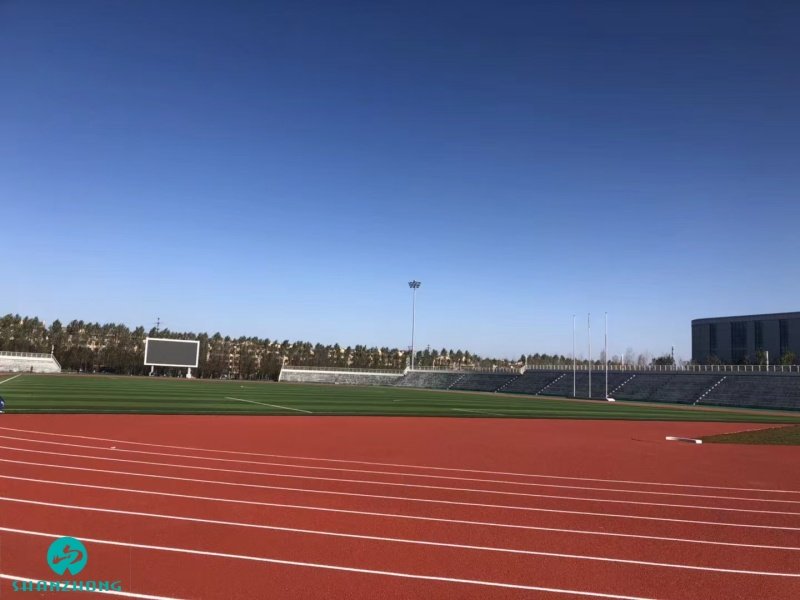
Creating a world-class cast-in-place running track requires dual expertise in premium materials and scientific construction. Our EPDM/recycled rubber granules and PU adhesive provide the perfect "elastic skeleton" and "bonding nerve" to deliver a track that is safe, comfortable, and enduring.
Whether you are building a school playground, a community fitness track, or a professional stadium, our tailored product solutions ensure compliance with international standards and exceptional performance. Contact us today to discover how we can help you build a track that stands the test of time.