

Mar 26th,2026
When it comes to creating high-performance, safe, and long-lasting sports surfaces, the choice of flooring material is critical. From schools and fitness centers to professional sports arenas and recreational facilities, each application demands unique qualities—such as shock absorption, durability, and maintenance ease. Among all options, rubber tiles (specifically synthetic rubber tiles) have emerged as the top choice for discerning project owners, engineers, and facility managers. Below, we break down why rubber tiles outperform traditional alternatives like PVC, wood, and concrete.
1. Superior Shock Absorption & Player Safety
Sports injuries often stem from hard or unyielding surfaces. Rubber tiles are engineered to address this risk, offering exceptional shock absorption that other materials can’t match.
Shock Absorption Rate: Premium rubber tiles typically absorb 20–35% of impact force, reducing stress on joints, knees, and ankles during jumps, sprints, or falls. This makes them ideal for basketball courts, running tracks, and children’s play areas.
Comparison: PVC flooring offers minimal shock absorption (usually <10%), while wood and concrete transmit most impact directly to the body, increasing injury risks.
Safety Standard Compliance: Rubber tiles meet international safety standards (e.g., FIFA Quality Pro, EN 14877) for impact attenuation, ensuring full compliance with
commercial and institutional project requirements.
2. Unmatched Durability & Long-Term Value
Sports facilities face heavy, constant use—rubber tiles are built to withstand the test of time, outperforming competitors in longevity and wear resistance.
Wear Resistance: Synthetic rubber is resistant to scuffs, scratches, and abrasion from sports equipment (e.g., basketball shoes, cleats) and high foot traffic. Unlike wood floors, which require periodic sanding and refinishing, rubber tiles need no ongoing maintenance for heavy use.
Weather & Environmental Resistance: Rubber tiles perform flawlessly in both indoor and outdoor environments. They resist UV rays (no fading), extreme temperatures (-40°C to 80°C), moisture, and mold growth.
Comparison: PVC flooring can warp or degrade in direct sunlight or high heat; wood floors absorb moisture and rot over time; concrete is prone to cracking and dust accumulation.
Long Lifespan: With proper installation, rubber tiles have a service life of 10–15 years—2–3 times longer than PVC or wood flooring—delivering exceptional long-term value.
3. Low Maintenance & Cost Efficiency
Total cost of ownership (TCO) is a key consideration for any sports project. Rubber tiles shine here, too.
Zero High-Cost Maintenance: No sanding, polishing, or special cleaning products are needed. Routine cleaning with water and mild detergent is sufficient, reducing labor and maintenance costs by up to 70% compared to wood flooring.
Easy Replacement & Repairs: Individual tiles can be replaced quickly if damaged, without replacing the entire floor. PVC or wood floor repairs often require full section removal and professional installation, driving up costs.
Lightweight Installation: Rubber tiles are lightweight and easy to install (interlocking or glued), minimizing downtime for facility renovations. Concrete floors demand extensive preparation (leveling, sealing) and longer installation times.
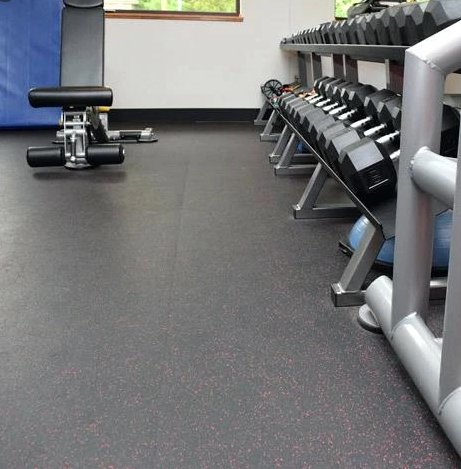
4. Excellent Traction & Slip Resistance
Slip-related accidents are a major concern in sports facilities—rubber tiles provide consistent traction across all conditions.
Anti-Slip Performance: The textured surface of rubber tiles offers high coefficient of friction (CoF), even when wet or exposed to sweat. This makes them suitable for wet environments (e.g., aquatic centers, locker room adjacent areas) and rainy outdoor settings.
Comparison: PVC flooring has low slip resistance when wet; wood floors become slippery with moisture; polished concrete is extremely dangerous in damp conditions.
5. Acoustic Performance & Comfort
Beyond performance, rubber tiles enhance the overall user experience through acoustic benefits and underfoot comfort.
Sound Absorption: Rubber effectively reduces echo and noise transmission, making it ideal for indoor sports halls, schools, and multi-purpose facilities.
Underfoot Comfort: The flexible, resilient surface of rubber tiles reduces fatigue during long periods of standing or activity, unlike hard concrete or rigid PVC.
6. Design Flexibility & Aesthetics
Rubber tiles no longer sacrifice looks for performance. They offer versatile design options to match any project’s vision.
Customization: Available in a wide range of colors (including brand-specific hues), patterns, and sizes (e.g., 500x500mm, 1000x1000mm). Interlocking tiles enable creative layouts, while solid color options suit minimalist or corporate aesthetics.
Branding Opportunities: Custom logos, court markings, or color schemes can be integrated into the tile design, helping facilities stand out (e.g., school mascots, sports team colors, or commercial venue branding).
Conclusion: Why Choose Rubber Tiles?
When comparing rubber tiles to PVC, wood, concrete, or other sports flooring materials, the advantages are clear: superior safety, unbeatable durability, low maintenance, excellent traction, and flexible design. For any sports facility—whether a small community center, a professional arena, or a school playground—rubber tiles deliver a solution that balances performance, longevity, and cost efficiency.
At Shanzhong, we specialize in high-quality rubber tiles tailored for sports applications. Our products are rigorously tested to meet global standards, and our team of experts provides customized solutions to fit your project’s unique needs. Invest in rubber tiles—and build a sports surface that performs, protects, and lasts for decades.