

Mar 17th,2026
In construction, there are two "low-key but crucial" materials that quietly support the durability and safety of projects — EPDM (Ethylene Propylene Diene Monomer) and PU Glue (Polyurethane Glue). Whether it is outdoor site paving, roof waterproofing, or component bonding, they play an indispensable role. Many people have only a vague understanding of these two materials. Today, we will explain their core knowledge points in plain language, help you avoid mistakes in construction material selection, and understand the "ins and outs" of building materials~
I. EPDM: The "Durable King" in Construction, an All-Round Player Among Flexible Materials
First, let’s talk about EPDM. Its full name is Ethylene Propylene Diene Monomer, a synthetic rubber made by catalytic polymerization of ethylene, propylene and a small amount of non-conjugated diene as monomers. It is mostly a colorless to milky white translucent solid, non-toxic and odorless, with a "super durable" attribute, making it a "flexible protection expert" in the construction field.
1. Core Characteristics: Durable by Strength, Suitable for Various Scenarios
The core of EPDM’s advantage lies in the stability of its molecular structure — there are almost no unsaturated bonds on the main chain, which gives it far superior aging resistance than ordinary rubber, known as "crack-free rubber" . Specifically, it has 3 core characteristics, and you will know why it is popular after reading:
Excellent Weather Resistance: It is not afraid of sun, rain, and alternating high and low temperatures. Under the conditions of ozone concentration of 50pphm and 30% stretching, it can be continuously free of cracks for 150 hours, and will not crack after 3 years of exposure to sunlight. It can work stably in the environment of -60℃ to 150℃, and is not easy to age, harden or crack when used outdoors for a long time.
First-Class Waterproof and Moisture-Proof Performance: As a polymer alkane, EPDM has strong hydrophobicity, does not absorb water or seep water, and will not show obvious deterioration when placed in superheated steam at 230℃ for 100 hours. It is often used for roof waterproofing membranes and basement moisture-proof layers, with a service life of more than 25 years.
Outstanding Flexibility and Toughness: It is soft and elastic, and can adapt to slight deformations of building structures, such as roof settlement and ground expansion. It will not break due to deformation, and can resist a certain impact. It is suitable for scenarios that require "flexible protection" such as sports venues and expansion joint sealing.
2. Common Uses: More Than Waterproofing, It’s Used Everywhere
EPDM has a wide range of applications in construction, covering waterproofing, sealing, site paving and many other fields, which can be seen everywhere in daily life:
Waterproofing Projects: Roof waterproofing membranes, basement moisture-proof layers, and bathroom waterproofing liners are especially suitable for large-area and easily deformable roofs, which can effectively avoid water leakage hazards.
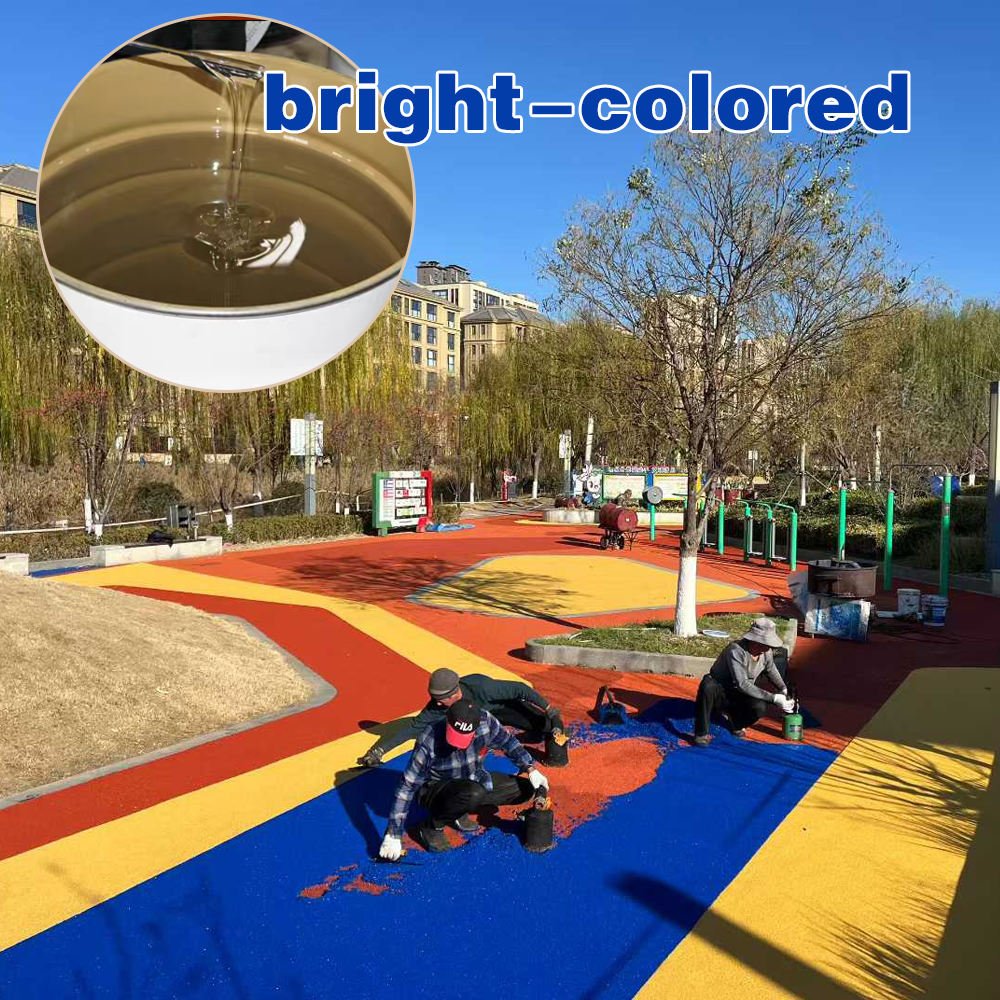
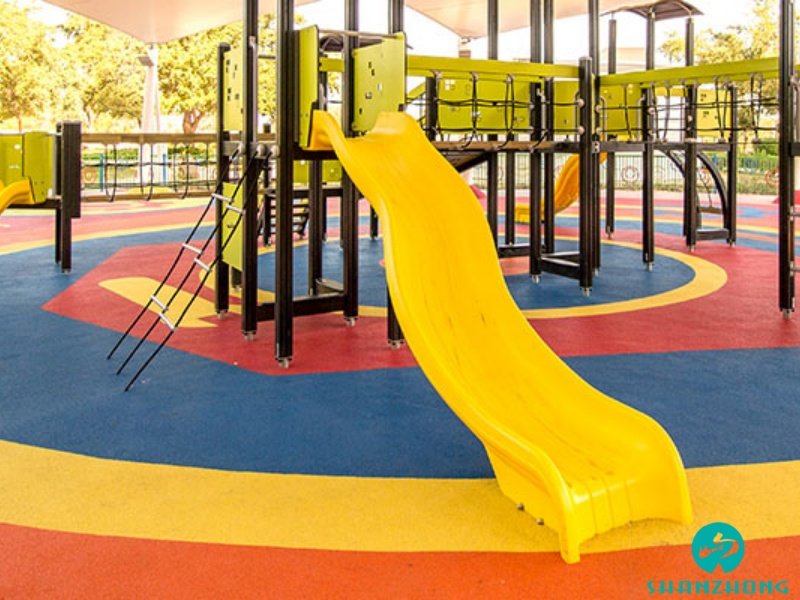
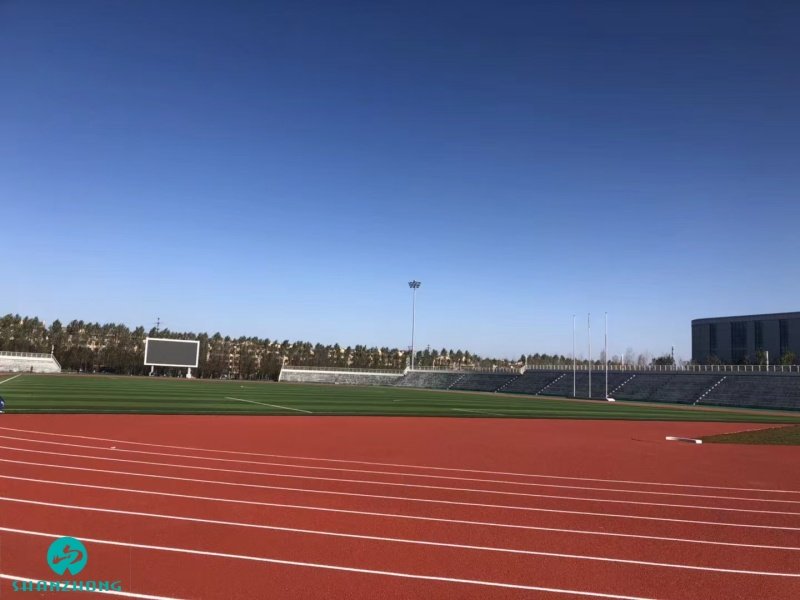
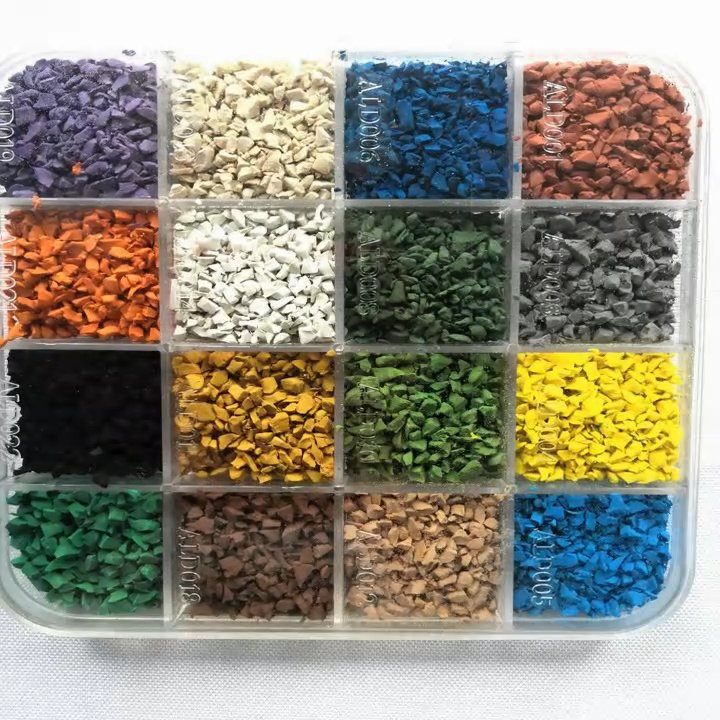
Sports Venues: The surface paving of community fitness areas, school playgrounds, and plastic runways. EPDM particles bonded with PU glue have a soft foot feel, wear resistance and anti-skid performance, and can buffer impact force to protect human joints.
Sealing Protection: Door and window sealing strips, building expansion joint sealing, and pipeline interface sealing. Using its elasticity and weather resistance, it isolates wind, rain, dust and noise, and improves the airtightness of buildings.
Other Scenarios: It can also be used for plastic modification, electrical insulation parts, etc. With its excellent electrical insulation performance, it is suitable for the insulation protection of high and low voltage wires and cables.
II. PU Glue: A "Strong Adhesive" for Construction Bonding, Suitable for Various Materials
After talking about EPDM, we have to mention its "best partner" — PU Glue. The full name of PU Glue is Polyurethane Glue, commonly known as white glue. It is an adhesive made of polyurethane resin as the core raw material, divided into water-based and oil-based types. It is colorless and translucent, environmentally friendly and non-toxic, easy to operate, and is a "versatile player" in the field of construction bonding.
1. Core Characteristics: Firm Bonding and Strong Adaptability
The core advantage of PU Glue is "wide bonding range and high firmness", while taking into account weather resistance and flexibility. It can solve the problem that many conventional glues "cannot bond firmly and are easy to fall off". The specific characteristics are as follows:
High Bonding Strength: It can firmly bond various building materials such as EPDM, metal, plastic, wood, glass, and stone. After bonding, it is not easy to fall off or crack, and can even bear a certain tensile force and impact force, which is especially suitable for the bonding construction of EPDM particles.
Excellent Weather Resistance: Like EPDM, it can resist sun, rain, high and low temperatures, is not easy to age or deteriorate in the outdoor environment, and its bonding performance is stable for a long time, which will not fail due to environmental changes.
Good Flexibility: After bonding, it will not become brittle or hard, and can expand and contract with the slight deformation of the bonded material, avoiding cracks at the bonding place caused by material deformation, which perfectly adapts to the bonding needs of flexible materials such as EPDM.
Environmental Protection and Convenience: Water-based PU Glue is environmentally friendly and non-toxic, without pungent odor. It does not need complex proportioning during construction, can be used immediately after opening, and is suitable for assembly line construction and on-site operation with higher efficiency.
2. Common Uses: Wherever Bonding is Needed, It is There
The application scenarios of PU Glue almost cover the entire field of construction, especially in scenarios that require "strong bonding + flexible adaptation", it performs particularly prominently:
EPDM-Related Bonding: This is one of its core uses. For example, the paving of EPDM particles in sports venues and the splicing of EPDM waterproofing membranes. Bonding with PU Glue can make the particles and membranes fit closely, improving the overall firmness and waterproofness.
Building Component Bonding: The bonding of wood and stone, metal and plastic, glass and walls. For example, door and window installation, stone curtain wall splicing, and furniture assembly. PU Glue can achieve "seamless bonding", taking into account both firmness and aesthetics.
Waterproof and Leak Repair: For leak repair of cracks in roofs, walls and pipelines, filling and bonding with PU Glue can quickly seal the cracks, and at the same time play a waterproof and moisture-proof role, making up for the deficiencies of traditional leak repair materials.
Other Scenarios: It can also be used in automotive manufacturing, electronic and electrical fields, such as automotive body component bonding and electrical component fixation. With its excellent bonding performance, it is suitable for various industrial scenarios.
III. EPDM and PU Glue: A Golden Pair with 1+1>2 Construction Effect
In many construction scenarios, EPDM and PU Glue are "indispensable" golden partners. The combination of the two can exert an effect far exceeding that of a single material. The most typical ones are sports venue paving and waterproofing projects:
For example, in a community plastic fitness area, first lay the base course, then mix EPDM particles with PU Glue in proportion, spread and compact evenly. PU Glue can firmly lock the EPDM particles to form a flat, soft and wear-resistant surface layer. It not only exerts the elasticity and weather resistance of EPDM, but also uses the strong bonding property of PU Glue, making the venue have a longer service life and safer.
Another example is roof waterproofing. At the splicing place of EPDM waterproofing membranes, bonding with PU Glue can achieve "seamless sealing", avoiding rainwater seepage from the splicing seams. At the same time, the weather resistance of PU Glue perfectly matches EPDM, and even if it is exposed outdoors for a long time, it can maintain good bonding and waterproof effects.
IV. Purchase and Construction Tips to Avoid These Mistakes
Many people are prone to stepping on pitfalls in both purchase and construction. Here are 2 practical tips to help you avoid detours:
1. Purchase Tips
Choosing EPDM: Prioritize weather resistance and density. High-quality EPDM has a density of 0.86~0.87g/cm³, no odor, no impurities, and is not easy to break after stretching. Different types (such as Type E and Type D) can be selected according to the purpose. Among them, Type E has fast vulcanization speed and good heat resistance, which is suitable for building waterproofing and sports venues.
Choosing PU Glue: Select water-based or oil-based according to the construction scenario. For indoor scenarios, water-based is preferred (environmentally friendly and odorless); for outdoor long-term exposure scenarios, oil-based can be selected (better weather resistance); pay attention to checking the bonding strength parameters, and prefer products with tensile strength ≥1.0MPa and curing time of about 24 hours.
2. Construction Mistakes
Mistake 1: Too little PU Glue is used when laying EPDM particles. Insufficient dosage will lead to unstable bonding of particles, which are easy to fall off and sand. It is recommended to mix EPDM particles and PU Glue in a ratio of 1:5~8.
Mistake 2: Proceeding to the next construction step before PU Glue is cured. PU Glue usually takes 24 hours to fully cure. If it is stressed before curing, it will cause cracks and detachment at the bonding place, affecting the construction effect.
Mistake 3: Ignoring the construction environment. When constructing EPDM and PU Glue, avoid rainy days, high temperatures (exceeding 35℃) and low temperatures (below 5℃), otherwise it will affect the bonding effect and material performance.
V. Summary: Choose the Right Building Materials for Durable and Worry-Free Projects
With its advantages of weather resistance, waterproofing and flexibility, EPDM has become the "main force" of flexible protection in construction; relying on its characteristics of strong bonding and wide adaptability, PU Glue has become a "good helper" for construction bonding. The combination of the two can perfectly adapt to various construction scenarios such as waterproofing, sealing and site paving.
Understanding the core knowledge points of these two materials can help you make more appropriate choices whether it is decoration material selection, project construction or daily maintenance, avoiding rework and maintenance caused by improper material selection, and making construction projects more durable and worry-free.
If you want to know more about the specific purchase models and construction details of EPDM and PU Glue, or popular science knowledge of other building materials, please leave a message in the comment area, and we will answer you one by one~